Home › Stormwater Management Facility Hydroseeding
Our stormwater facility hydroseeding in Denver, CO covers detention basins, bio retention cells, and drainage channels. We apply seed mixes and erosion products that meet design and regulatory requirements. Hydroseeding ensures consistent coverage on side slopes, bottoms, and inlet areas.
Legendary Hydroseeding Denver provides professional stormwater facility hydroseeding throughout Denver, CO, Colorado and the surrounding area. Our licensed, insured crew delivers safe, clean, on-time work with a free estimate before anything begins. Call 720-734-8802 or request your free quote.
Hydroseeding for Denver’s Stormwater Facilities, Explained in Plain Language
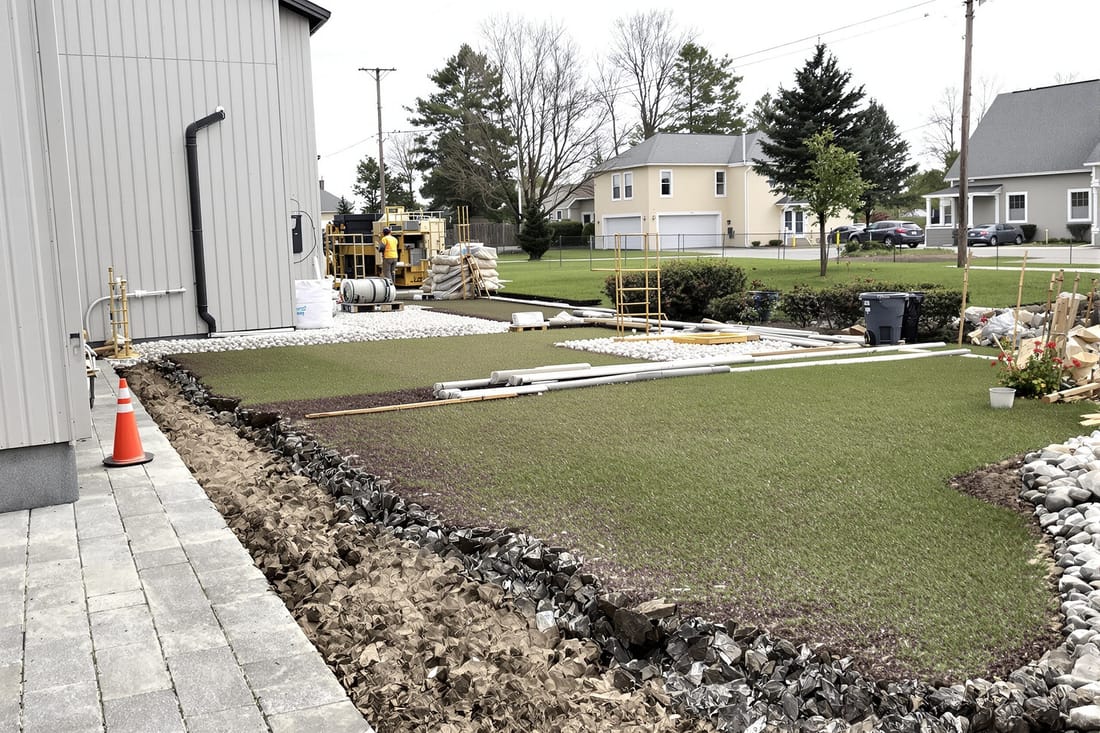
Stormwater facility hydroseeding is not the same as spraying a lawn green. At Legendary Hydroseeding Denver, we design each mix and application method to work with how your detention pond, retention basin, or water quality swale actually functions during a storm. In metro Denver, sites see quick snowmelt, intense summer downpours, and long dry spells. That means the vegetation around your stormwater facility has to handle standing water one week and baked, compacted soil the next.
Our work starts with understanding what type of stormwater management facility you have and who regulates it. That typically includes the City and County of Denver, a neighboring municipality, or a special district, plus your HOA or commercial property standards. We look at your approved drainage plan, slopes, inlets and outlets, emergency spillways, and any water quality structures. Then we match a hydroseed plan to those requirements so you stay in compliance with your O&M (operations and maintenance) obligations.
The goal is simple: create a stable, rooted vegetative cover that controls erosion, filters pollutants, and still allows inspectors to see and access critical structures. Hydroseeding is often the most cost effective way to do that in Denver’s clay and fill soils, especially on steep embankments and hard to reach pond edges.
How Stormwater Facility Hydroseeding Actually Works
A typical stormwater facility hydroseeding project with Legendary Hydroseeding Denver follows a clear sequence so you know what is happening on your property.
1) Site walk and drainage review. We meet onsite to walk the pond, forebay, swales, or channels. We check for existing vegetation, bare or rilled slopes, sediment buildup, and any signs of failing riprap or undercut banks. We also look for inflow and outflow points, emergency spillways, and maintenance access routes so we do not block or bury anything during hydroseeding.
2) Soil and grade preparation. Hydroseeding does not fix bad grades. If needed, we coordinate light regrading on eroded slopes to restore design lines and remove gullies. Where compacted subsoil is an issue, we recommend ripping or discing to improve rooting depth. For stormwater ponds with poor topsoil, we often suggest adding a thin compost blanket or topsoil layer in critical areas like embankment slopes and high flow channels.
3) Custom slurry design. Instead of a one size mix, we build a hydroseed slurry around your facility type. For extended detention basins, we typically use a deep rooted native grass blend with some quick germinating cover species. For low flow water quality swales, we might incorporate more fine fescues or wet tolerant natives along the bottom and drought tolerant species higher on the banks. The slurry usually includes seed, fertilizer appropriate for Front Range soils, tackifier to lock it in place, and either paper or wood fiber mulch. On steeper slopes or high energy inlets, we may upgrade to a bonded fiber matrix for extra erosion protection.
4) Application with attention to structures. When we spray, we deliberately avoid coating outlet structures, trash racks, manhole lids, and access paths so inspectors and maintenance crews can still see and reach them. Around concrete inlets and outfalls, we feather the application so vegetation can stabilize the soil without obstructing flow.
5) Post install guidance. You receive detailed watering and mowing guidelines tailored for stormwater facilities. For example, we explain how to avoid scalping slopes, when to limit mower traffic on wet embankments, and how to balance weed control with new native establishment. We also outline what your Denver area inspector typically expects to see during the first and second growing seasons.
Seed Mixes, Materials, and Options That Work in Denver’s Climate
The performance of any stormwater facility hydroseeding job in Denver largely comes down to the seed mix, mulch type, and erosion control materials chosen for your site. Legendary Hydroseeding Denver focuses on combinations that stand up to our freeze thaw cycles, heavy summer rains, and long dry spells.
For many detention and retention basins, we lean on native or adapted grass mixes with deep roots. Species often include western wheatgrass, slender wheatgrass, blue grama, and creeping red fescue, blended based on sun exposure and how often water stands in the basin. To get quick green cover and erosion control in the first season, we might include nurse species like annual rye, but we keep those in balance so they do not outcompete your long term natives.
Mulch choices affect both cost and performance. Basic paper mulch can work on gentle slopes and well protected areas inside the basin, while wood fiber or blended mulches hold moisture better and resist washouts during thunderstorms. On embankments above 3:1 slopes or near high flow inlets, a bonded fiber matrix or using hydroseeding in combination with erosion control blankets helps keep everything in place until roots form.
We also consider maintenance access when choosing materials. For example, if your pond is mowed a few times a year by a contractor with a wide deck mower, we tend to avoid overly tall, stiff species right along maintenance routes to reduce scalping and rutting. If your facility is designed as a low mow or naturalized basin in Denver’s open space system, we select more natives that can stand taller while still meeting city or county visual and fire safety requirements.
If your property falls under a specific plan, such as Denver Green Infrastructure standards or a subdivision development agreement, we can match required seed specs or propose equivalent alternatives that still meet the functional goals and pass review.
Costs, Timelines, and What Affects Your Price
Stormwater facility hydroseeding costs in the Denver area vary, and we prefer to be transparent about what drives the number you see on your quote. At Legendary Hydroseeding Denver, pricing typically reflects four main factors: size of the area, slope and access, seed and mulch specifications, and site preparation needs.
Size is straightforward. Large, open basins are more efficient to spray than small, broken up swales and narrow channels, so the per square foot cost can actually be lower on big jobs. Slope and access are where things get tricky. Steep embankments that require hose work from the top, or sites where we cannot get the hydroseeder near the work area, add labor time and sometimes specialized safety setups.
Seed and mulch specifications can change the price considerably. A simple cool season commercial seed blend with paper mulch costs less than a custom native mix with a bonded fiber matrix on critical slopes. If your stormwater permit or design engineer requires specific mixes or erosion control products, we will itemize those so you know exactly what you are paying for.
Site preparation is the other big variable. If we are coming in after a new construction project where the basin is graded properly and lightly tracked, costs are lower. If your existing pond has ruts, gully erosion, sediment buildup, or compacted clay pan, we may need to include regrading, light scarification, or compost amendments so the hydroseeding will actually take. We will always explain when a cheaper “spray it and hope” approach is likely to fail, so you can make an informed decision.
Most stormwater facility hydroseeding projects can be completed in one or two days of onsite work, depending on size. Establishment is the longer part. In the Denver climate, expect to see first green within 1 to 3 weeks in the growing season, with real erosion control performance building over the first full year. We can schedule around your HOA meetings, commercial tenant activity, or municipal maintenance windows to minimize disruption.
Compliance, Inspections, and Long Term Performance
A big reason property managers and HOAs in Denver call Legendary Hydroseeding Denver for stormwater facility hydroseeding is compliance. Local jurisdictions and MS4 permit programs expect stormwater facilities to be stable, accessible, and functioning as designed. Bare dirt on pond slopes, repeated washouts below outfalls, or clogged vegetated swales are red flags during inspections.
We shape our hydroseeding plans around what inspectors look for. That includes consistent vegetative cover on embankments, stabilized areas around inflow and outflow structures, and plant heights that do not obscure critical infrastructure or attract nuisance wildlife. In HOA settings, we also consider aesthetics and sightlines from nearby homes so the facility looks maintained rather than abandoned.
If you are under a construction stormwater permit and need to close out a site, we can help get you to “final stabilization” by documenting coverage levels, seed mixes, and installation dates. For existing, older facilities that have fallen out of compliance, we can combine hydroseeding with spot repairs such as reshaping eroded swales, cleaning out sediment forebays, or transitioning from rock only solutions to vegetated systems where appropriate.
Long term performance relies heavily on maintenance. We provide specific mowing heights and timing for stormwater basins, usually higher and less frequent than standard turf, to encourage stronger root systems. We also recommend when to schedule the first weed control applications so they do not damage young desirable grasses. For native based mixes, we explain realistic expectations, including that full community development may take two or more growing seasons.
Our team is based in the Denver area, so we see how these facilities perform during spring snowmelt and late summer storms. When we design and install stormwater facility hydroseeding, it is with an eye toward how that pond or swale will look and function when the next big storm hits, and how your next inspection will go.