Home › Soil Amendments and Fertilization for Hydroseeding
Our hydroseeding soil amendments in Denver, CO correct pH, add organic matter, and supply starter fertilizer so new grass thrives. We evaluate your soil and apply lime, compost, and nutrients as needed. Healthy soil means faster germination, deeper roots, and a thicker lawn.
Legendary Hydroseeding Denver provides professional hydroseeding soil amendments throughout Denver, CO, Colorado and the surrounding area. Our licensed, insured crew delivers safe, clean, on-time work with a free estimate before anything begins. Call 720-734-8802 or request your free quote.
Why soil amendments matter for hydroseeding in Denver
Hydroseeding works only as well as the soil underneath it. Along the Front Range, that soil is usually compacted clay, fill from construction, or sandy spots that dry out fast. At Legendary Hydroseeding Denver, we treat soil amendments and fertilization as the first phase of any successful hydroseeding job, not an optional upgrade.
Most Denver yards sit on clay-heavy soil that drains poorly in spring, then bakes hard in summer. Grass seed in a hydroseed mix will germinate in that soil, but roots stay shallow, weeds move in, and the lawn struggles every time we get a hot, dry stretch or a heavy downpour. Proper hydroseeding soil amendments change the structure of the top few inches so air, water, and nutrients can actually reach the roots.
We also see a lot of new builds where the topsoil was scraped off and replaced with construction fill. That fill is usually low in organic matter and short on key nutrients like nitrogen and phosphorus. Without correcting that, you might get a quick green flush from the starter fertilizer in the hydroseed slurry, then watch the lawn stall out six weeks later.
Our approach at Legendary Hydroseeding Denver is simple and practical. We test first, then amend only what is truly needed. That might mean adding compost to clay in Stapleton, gypsum to break up sodic soils in parts of Aurora, or a different fertilizer blend for a shady Wash Park backyard than for a full-sun Erie hillside. The goal is the same everywhere: a soil base that can hold moisture without staying soggy and that feeds your new turf for the long term, not just the first month.
Our Denver-specific soil assessment and planning process
Before we talk about hydroseed mulch colors or grass varieties, we look at the soil. For hydroseeding soil amendments to pay off, they have to be matched to what is actually in your yard.
Step one is a site walk. A technician from Legendary Hydroseeding Denver checks slope, drainage patterns, existing vegetation, bare spots, and where water tends to pool or run off. We look for clues like salt crusts, heavy thatch, or gray compacted areas that suggest traffic or equipment damage. On new construction, we check how deep the rock or fill layer is and how far the sprinkler heads are set back from hardscape.
Step two is testing. Depending on project size and budget, we use one or more of the following:
• A basic field test using a soil probe, simple pH solution, and a texture-by-feel assessment for quick decisions on smaller residential jobs.
• A send-out lab test for larger yards, HOA common areas, or commercial properties. This gives us pH, organic matter percentage, cation exchange capacity, and individual nutrient levels (nitrogen, phosphorus, potassium, calcium, magnesium, and more).
With those results in hand, we design the amendment and fertilizer plan. For example, a typical Denver clay lawn with low organic matter and slightly alkaline pH might get compost at 1 to 2 inches deep, plus a balanced granular fertilizer with a higher phosphorus content to help root development. A sandy lot in Brighton or near DIA might get less compost but more emphasis on slow-release nitrogen that will not leach out.
We also plan around your irrigation system. If you have basic fixed-spray heads with uneven coverage, we recommend a little more organic matter to buffer against dry spots. If you have a modern smart controller and efficient rotors, we can fine tune fertilizer rates a bit more aggressively because moisture control will be better. All of this is set before a hydroseed hose comes off the truck so we are not guessing once the slurry is already on the ground.
How we install soil amendments and fertilizer before hydroseeding
On installation day, Legendary Hydroseeding Denver treats soil prep as its own job, not just a quick rake before spraying. The order of operations makes a big difference in how well your new lawn establishes.
1. Clearing and rough grading. We remove debris, rocks larger than about a golf ball, and old dead turf. Bare dirt does not have to be perfectly smooth yet, but we want a consistent grade so water will not collect against your foundation or create ruts. On some Denver lots, we lightly scarify or rip the surface to break up heavy compaction left by builders.
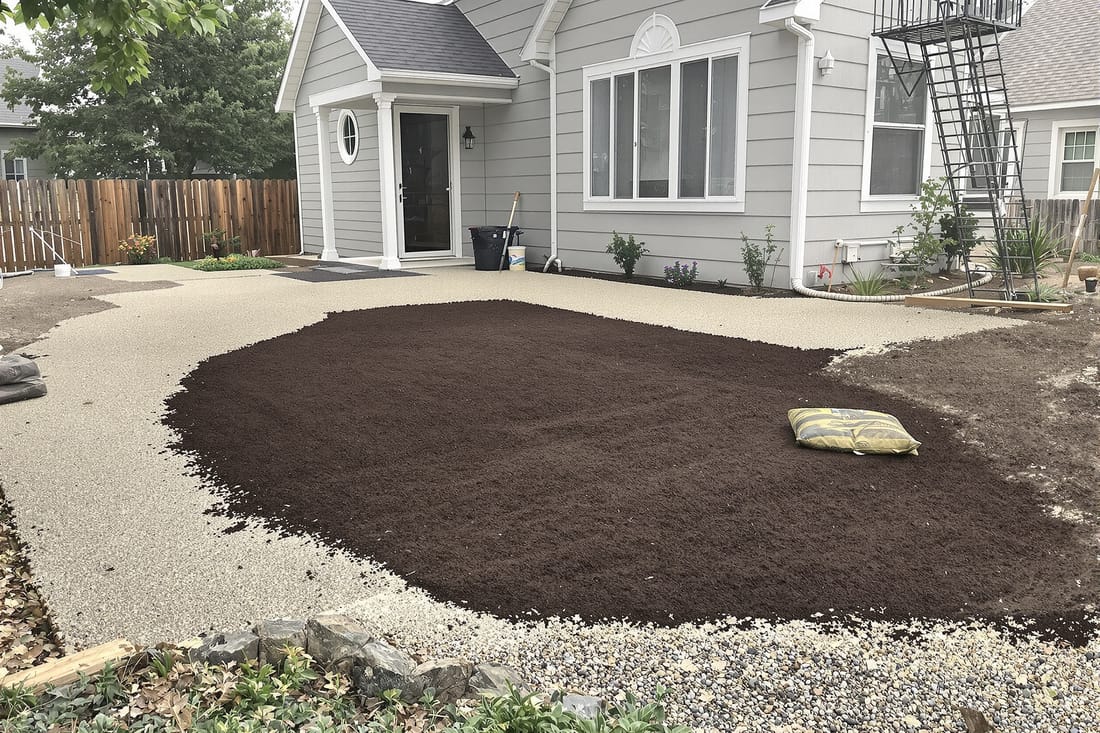
2. Spreading soil amendments. Based on the plan, we spread compost, gypsum, or other amendments at a measured depth, usually 0.5 to 2 inches. For a small residential lawn, this might be done with wheelbarrows and rakes. For larger properties or sloped areas, we use a tractor with a spreader attachment. In the Front Range climate, we prefer well-aged, screened compost that is low in weed seeds and salts, not raw manure or unknown bulk material.
3. Incorporating amendments. For most hydroseeding jobs we till or power rake the top 3 to 4 inches so the amendments blend with the existing soil, rather than just sitting on top. This step is crucial on Denver clay because it prevents a layered effect where water sits on the interface between compost and hardpan soil. On steep slopes where erosion is a concern, we may do a shallower incorporation and use extra tackifier in the hydroseed mulch instead of deep tilling.
4. Applying pre-plant fertilizer. Once the soil is blended and graded again, we apply a granular starter fertilizer at a calibrated rate. This is different from the soluble fertilizer that goes into the hydroseed tank. The granular product breaks down slowly in the soil profile, feeding the roots for several weeks and reducing the risk of burn.
5. Final grading and rolling. We shape the soil to its final grade, level low spots, and in many cases run a roller over the surface to firm it lightly. Proper firmness helps keep the hydroseed slurry from soaking in too deep or washing into depressions. Then we are ready to hydroseed, with a seed, mulch, and fertilizer blend that matches the soil work we just completed.
Fertilization during and after the hydroseeding process
Hydroseeding soil amendments are only half the story. Fertilization runs through the entire timeline of your new lawn: in the slurry, in the soil, and in follow-up treatments.
Inside the hydroseed mix, we typically use a soluble starter fertilizer with a higher phosphorus content to promote root growth, along with enough nitrogen and potassium to push early color and stress tolerance. For Denver area water supplies, which are often high in dissolved minerals, we avoid products that raise salt levels too much. On slopes or near storm drains, we adjust formulas to stay within local water quality best practices and to avoid excessive phosphorus where runoff could reach inlets.
Once the hydroseed is sprayed, the calendar matters. We give every customer a written fertilization schedule based on season. For example:
• Spring and early summer seeding (April through June): a light follow-up fertilizer 4 to 6 weeks after germination, then another application in early fall.
• Late summer and fall seeding (August through mid October): one follow-up fertilizer about 6 weeks after seeding, then a winterizer formulation if the lawn is established enough before the ground freezes.
We also factor in your irrigation water. Along the Front Range, many neighborhoods use Denver Water, but some HOAs and newer communities have non-potable or well water with different mineral profiles. Harder water can tie up certain nutrients, especially iron, so we sometimes recommend an iron-rich or chelated iron product later in the season if we see chlorosis (yellowing between the veins of the leaves).
If you prefer organic or low-synthetic approaches, we can use more compost tea style feedings and slow-release organic fertilizers after establishment. This usually costs more upfront and works more slowly, but it can be a good fit in parts of Denver where residents want lower chemical inputs or where kids and pets are outside constantly.
The most common fertilization problems we see are over-application by homeowners trying to get faster green-up and under-application after the first flush of growth. Too much nitrogen early on forces top growth before roots are ready, which makes the lawn more vulnerable in its first hot summer. Too little follow-up feeding, and the grass thins out, leaving room for weeds. Our goal is to hit the right rate and timing so the lawn thickens steadily without boom-and-bust cycles.
Costs, expectations, and what Denver homeowners should know
Soil amendments and fertilization for hydroseeding add cost upfront, but they usually save money over time by reducing reseeding, water use, and heavy weed treatments. Legendary Hydroseeding Denver prices this work based on several real-world factors instead of flat per-square-foot guesses.
The biggest cost drivers are depth and type of amendments, access for equipment, and slope. A flat, open backyard that needs 1 inch of compost and a basic starter fertilizer will be at the lower end of the range. A steep, compacted hillside behind a custom home in Golden that needs 2 inches of compost, gypsum, erosion control, and multiple site visits will be higher. We give itemized estimates, so you can see exactly what portion of the price is material, labor, and hydroseeding itself.
Before hiring anyone for hydroseeding soil amendments, ask how they determine what to add. If the answer is the same stock mix on every job, you may end up paying for materials you do not need, or worse, applying the wrong product for your soil. Ask if they incorporate amendments or just top-dress, how deep they work them in, and whether they provide a written watering and fertilization plan after seeding.
Denver does not usually require permits for residential soil amendments or fertilization on single-family lots, but there are a few local considerations. Many HOAs in areas like Green Valley Ranch, Highlands Ranch, and parts of Parker have rules about erosion, mud on sidewalks, and overspray onto neighboring properties. Proper soil prep and hydroseeding with the right mulch and tackifier helps meet those rules by keeping soil in place during storms. For larger commercial or multifamily projects that drain to specific storm infrastructure, we coordinate with site civil plans to stay within local stormwater management guidelines.
In our climate this work is also seasonal. The prime windows for hydroseeding with full soil amendments in Denver are typically late April through June and mid August through early October, when soil temperatures and moisture are favorable. Outside those times, we can still do limited prep or planning, but we may recommend waiting to spray seed so you get better germination for your money.
When you work with Legendary Hydroseeding Denver, you know exactly what is going into your soil, why it is being used, and how it fits into the long-term health of your lawn. We do not just spray green slurry and leave. We prepare the ground, feed it correctly, and give you clear instructions so the investment you make in amendments and fertilization pays off in a dense, durable lawn that can handle Denver sun, spring snow, and everything in between.