Home › Slope and Bank Erosion Control Hydroseeding
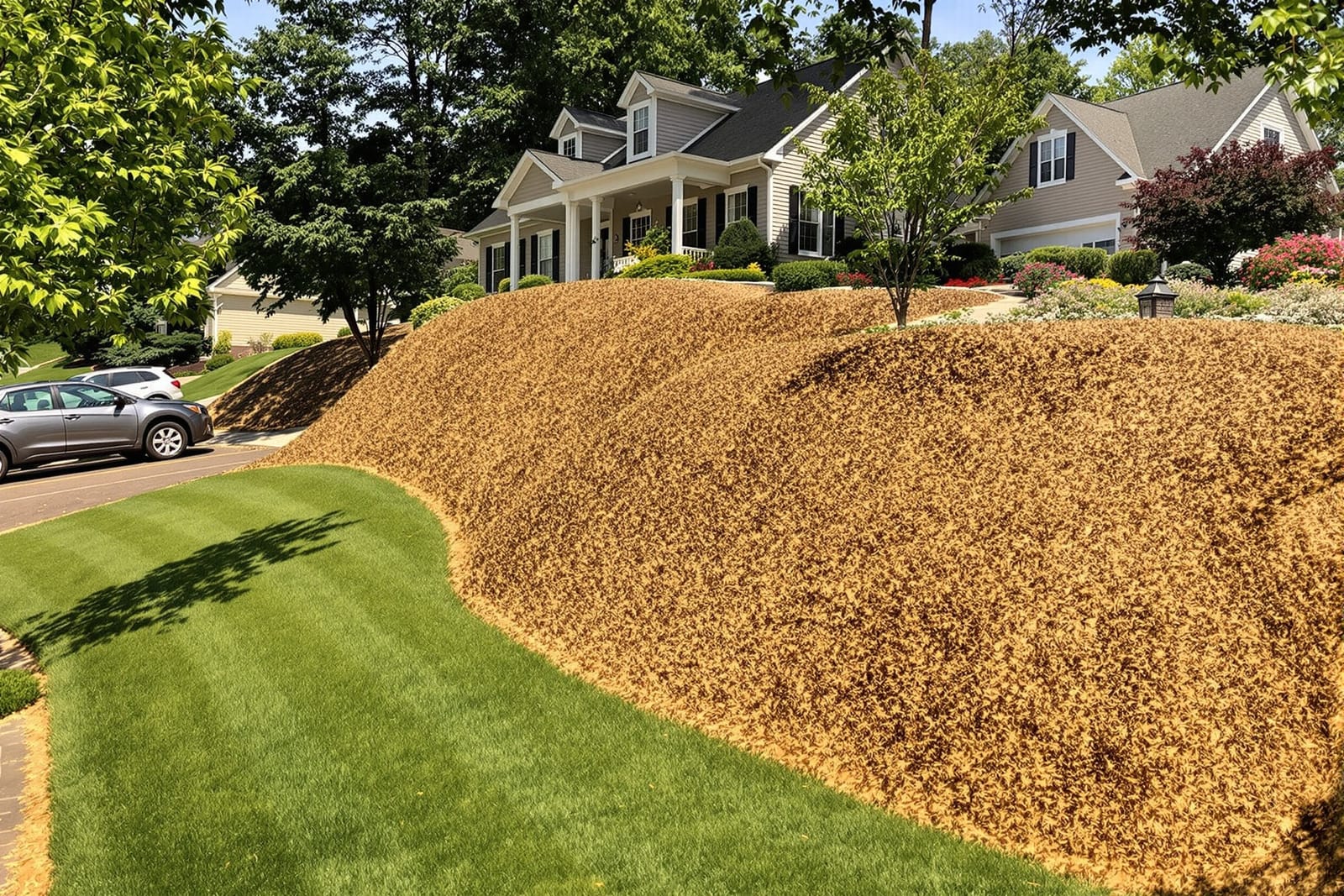
Our residential erosion control hydroseeding in Denver, CO stabilizes steep slopes, banks, and drainage swales around your property. We use specialized mulch and seed blends that lock soil in place while vegetation establishes. Protect foundations, driveways, and landscaping from washouts with a durable, green solution.
Legendary Hydroseeding Denver provides professional residential erosion control hydroseeding throughout Denver, CO, Colorado and the surrounding area. Our licensed, insured crew delivers safe, clean, on-time work with a free estimate before anything begins. Call 720-734-8802 or request your free quote.
Slope & Bank Erosion Problems in Denver’s Front Range
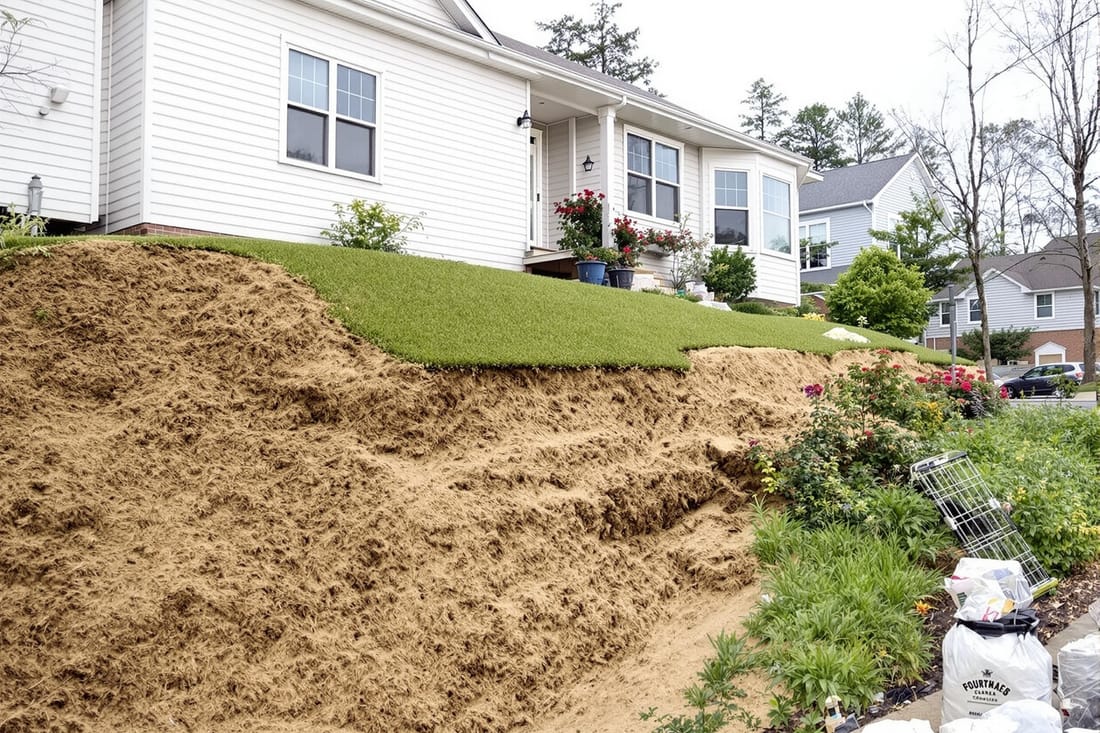
If you live on or near a slope in the Denver area, you already know how quickly soil can disappear after a spring storm or a heavy summer downpour. Our semi-arid climate, sudden cloudbursts, and snowmelt create a tough combination. Bare soil on banks, walkout basements, driveway cuts, or newly graded yards can rill, slump, or wash into the street or your neighbor’s property in one season.
Residential erosion control hydroseeding is a targeted way to stabilize those slopes without building expensive retaining walls everywhere. Instead of laying individual sod pieces or hoping seed from a bag will stay put, we apply a slurry of seed, fertilizer, tackifier, and mulch that bonds to the soil, absorbs water, and grows into a dense root mat that holds your bank in place.
Legendary Hydroseeding Denver focuses on realistic, site-specific solutions for Front Range homes. That means looking at your soil type (clay, decomposed granite, or fill), slope angle, drainage patterns, and how you actually use the space. A steep, shaded drainage swale in Golden needs a different mix and strategy than a sunny stacked slope behind a new build in southeast Denver. We design each erosion control hydroseeding job so it works with our weather patterns, not against them.
How Residential Erosion Control Hydroseeding Works, Step by Step
Our slope and bank erosion control hydroseeding process is hands-on and detailed, because slopes do not give you many second chances.
1) Site walk and slope assessment: We start by walking the entire slope with you. We look for existing rills, soft spots, seeps, downspout outlets, and areas where water concentrates. We measure slope length and steepness, note sun exposure, and inspect the soil. In many Denver neighborhoods, we see compacted construction fill, which changes how we prep and which seed mix will actually take.
2) Grading and surface prep: For erosion control hydroseeding to work, water must be able to soak in rather than race straight downhill. We lightly regrade where practical to break up long runs, fill undermined areas, and remove large clods, trash, and construction debris. On steeper banks, we create small terraces or micro‑swales to slow water. We roughen the surface with rakes or a harley rake so the slurry can key into the soil instead of sitting on a hard crust.
3) Soil conditioning and amendments: Many Denver slopes are subsoil pulled from basement excavations, which are low in organic matter. We often recommend a compost topdress or incorporation near the surface, plus a starter fertilizer appropriate for native or drought‑tolerant seed. On highly erodible sandy cuts, we may add extra tackifier and a higher mulch rate to increase moisture retention.
4) Custom seed and mulch selection: For erosion control slopes, we lean toward deeper‑rooted grasses and groundcovers rather than purely cosmetic turf. Examples include native fescues, western wheatgrass, and drought‑tolerant blends that can survive on limited irrigation once established. For banks you still want to mow, we can design a stabilizing turf-type seed blend. We pair the seed with a fiber mulch that matches the slope challenge, such as wood fiber at standard rates for gentle banks or heavier mulch at higher rates on steeper or more exposed slopes.
5) Hydroseeding application: Using our hose and tank system, we spray the slurry starting from the bottom of the slope upward to ensure even coverage and prevent overlaps that can channel water. On very steep banks, we apply in passes and adjust nozzle settings so the slurry clings instead of sliding. We vary the tackifier rate based on slope angle and expected water flow, which is critical in Denver’s intense but short‑duration storms.
6) Post‑application inspection and instructions: Once coverage is complete, we walk the slope again with you, point out the most vulnerable areas, and give you a written watering and care plan. For certain high‑risk spots, we may recommend adding erosion control blankets or temporary netting over the hydroseeded surface to hold everything in place until roots anchor the soil.
Materials and Design Options for Slopes and Banks
Not every residential erosion control hydroseeding project needs the same recipe. Legendary Hydroseeding Denver offers several design options so the slope solution matches your yard and budget.
Slope type and look: If you mainly care about keeping soil off your patio or driveway, a low‑growing native grass mix may be perfect. It creates a natural, meadowlike look that can be mowed occasionally or left taller for habitat. For more manicured front slopes that must blend with an existing lawn, we can integrate a tougher turf blend that still offers good root structure but can be maintained with a regular mower once established.
Mulch and tackifier levels: On gentle slopes behind homes in neighborhoods like Green Valley Ranch or Stapleton, a standard mulch rate and tackifier blend is usually enough. On steeper or north‑facing banks where soil stays slick, we bump up the mulch thickness so it locks together, and use a stronger or higher‑rate tackifier so the slurry stays put through heavy summer rain. This is particularly important for cut slopes along driveways, walkout basements, or at the back of lots where runoff concentrates.
Temporary reinforcement: For particularly challenging locations, such as slopes above retaining walls, drainage swales, or banks that feed directly into a street inlet, we often pair hydroseeding with erosion control blankets or biodegradable netting. Hydroseed is sprayed beneath or through these products, giving you both immediate physical protection and long‑term root reinforcement as the vegetation grows.
Irrigation strategies: Some Denver properties have full sprinkler coverage, others rely on hoses. On banks without irrigation, we design mixes that can tolerate less water once established but still require consistent moisture during germination. We may recommend temporary soaker hoses or specific watering schedules timed to cooler parts of the day. If your slope is too steep to irrigate evenly, we plan seed and mulch rates with that limitation in mind.
Timing, Costs, and Common Slope Challenges in Denver
Timing matters for erosion control hydroseeding in Colorado’s Front Range. Our favorite windows are mid‑spring after the worst freezes, and late summer to early fall when soil is still warm but days begin to cool. Spring jobs take advantage of snowmelt and longer days, while late summer and fall work benefit from fewer extreme downpours and reduced weed pressure. We can hydroseed slopes outside these windows, but we will talk through the tradeoffs, such as higher watering needs or additional mulch and tackifier.
Costs for residential erosion control hydroseeding vary based on real site conditions, not a flat per‑square‑foot number advertised online. Key drivers include slope steepness, accessibility (can we get a hose line directly to the area or are we running longer lengths around structures), the seed blend selected, mulch thickness, and whether erosion control blankets or minor grading are needed. During our estimate, we break out these factors so you can see where investing a bit more, such as heavier mulch on a problem bank, will save you from re‑repairing washouts.
Common slope issues we see across Denver include water from roofs or neighboring properties dumping onto a single narrow bank, compacted subsoil that sheds water, and homeowners trying to control erosion with turf grass alone. We often redirect or diffuse concentrated flows with small swales or rock splash pads before hydroseeding, then use plant mixes that can handle intermittent saturation followed by dry spells.
If you have existing erosion, such as small gullies or exposed roots, we address those first. That may involve cutting back undercut edges to stable soil, filling with compacted material, and then hydroseeding over a reshaped, more stable surface. Trying to hydroseed over an actively failing face usually leads to disappointment, so we are honest about what needs to be fixed before we spray.
What to Expect After Hydroseeding and How to Get Started
The weeks after residential erosion control hydroseeding are where your part of the project matters most. In Denver’s climate, keeping the slope evenly moist without flooding it is the goal. For most spring and early fall projects, that means several shorter watering cycles per day at first, then tapering as the seedlings emerge and begin knitting the soil together. We provide a tailored watering schedule based on your slope, sun exposure, and irrigation setup.
You can expect some green within 7 to 21 days depending on the seed mix and temperatures. Erosion control blends that include natives and deeper‑rooted species may take a bit longer to fill in but provide better long‑term stability. During this period, it is normal to see a bit of surface mulch movement in heavy storms. We ask you to call us if you notice any bare streaks or small rills forming so we can advise on touch‑up options before the next storm magnifies the issue.
Maintenance in the first year is focused on consistent moisture, keeping foot traffic and pets off steep banks, and controlling aggressive weeds that try to outcompete young seedlings. For slopes that are meant to be mowed, we recommend waiting until the grass is at least 3 to 4 inches tall and firmly rooted before the first cut, and we keep mower blades high so we do not scalp the new stand.
If you are looking at a bare or failing slope on your Denver property and are not sure whether to hydroseed, terrace, or build a wall, Legendary Hydroseeding Denver is happy to walk the site and talk through practical options. We will let you know when residential erosion control hydroseeding is the right solution, when it needs to be combined with other measures, and what it will realistically take to keep your soil where it belongs.